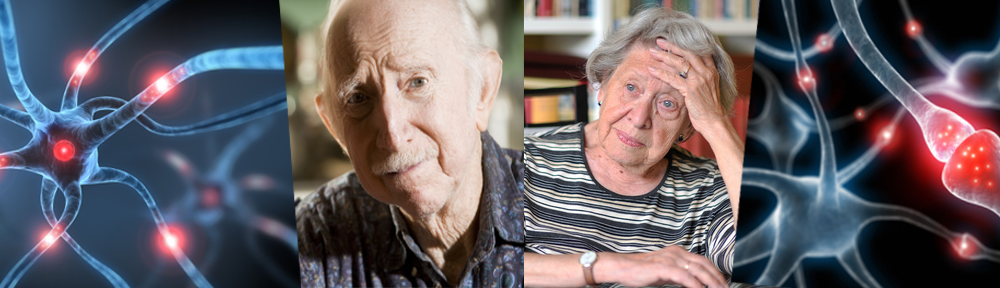
The Alzheimer’s Prevention Program

News from the web:

Just about everyone has some loss of memory as the decades collect. Don’t confuse normal aging with Alzheimer’s. But some people as they enter their 50s and 60s experience what is called “mild cognitive impairment” (MCI). They are often forgetful, can become a bit confused and display other symptoms suggestive of mild Alzheimer’s — but they can manage. However, MCI heralds a far greater likelihood of developing AD — as great as 15 times more risk. Some regard MCI as a transition to AD.

Alzheimer’s disease (AD) is the demon of older age. A small percentage of people (5 percent) will fall ill to its neurological destruction before the age of 65. But as we age into the 70s, 80s and beyond the numbers affected grow substantially. Today, every 70 seconds a person in the U.S. develops AD; estimates are that this rate will rise to every 30 seconds by 2050 as we all live longer. Not all dementia is due to Alzheimers: vascular dementia (due to blood vessel narrowing or stroke in the brain) accounts for perhaps 40 percent of severe memory problems (and other symptoms). But AD is the greatest threat to our memory — and even more so to our very sense of identity as we grow old.

Read all about it HERE

Adiponectin associated with dementia, Alzheimer’s disease risk in women

News from the web:

Higher plasma adiponectin levels may be an independent risk factor for all-cause dementia and Alzheimer’s disease in women, according to data recently published in the Archives of Neurology.

“It is well established that insulin signaling is dysfunctional in the brains of patients with Alzheimer’s disease, and since adiponectin enhances insulin sensitivity, one would also expect beneficial actions protecting against cognitive decline,” the researchers wrote. “Our data, however, indicate that elevated adiponectin level was associated with an increased risk of dementia and Alzheimer’s disease in women.”

Read all about it HERE

Alzheimer’s risk can be detected 10 years before symptoms, study finds

News from the web:

Alzheimer’s disease is a debilitating neuro-degenerative disease associated with memory loss, dementia and the eventual loss of motor functions. Often it is hard for doctors to officially diagnose someone with the disease until it has extensively progressed. According to Alzheimer’s Disease International, nearly 10 million people suffer from dementia in Europe alone, with Alzheimer’s accounting for the overwhelming majority of these cases. For years, scientists around the world have tried to come up with better treatments and a cure for the disease, but few have been shown to be particularly effective.

In a new scientific paper published in the January 1, 2012 edition of the Archives of General Psychiatry, a team of Swedish researchers have now shown that it’s possible to detect individuals with a high risk of developing Alzheimer’s 10 years before they show any outward symptoms. If their technique proves successful, it could become an important tool for managing future Alzheimer’s patients.

Read all about it HERE

Alzheimer’s: Diet ‘can stop brain shrinking’

News from the web:

A diet rich in vitamins and fish may protect the brain from ageing while junk food has the opposite effect, research suggests.

Elderly people with high blood levels of vitamins and omega 3 fatty acids had less brain shrinkage and better mental performance, a Neurology study found.

Trans fats found in fast foods were linked to lower scores in tests and more shrinkage typical of Alzheimer’s.

A UK medical charity has called for more work into diet and dementia risk.

Read all about it HERE

Silent Strokes May Cause Memory Loss In Seniors

News from the web:

Tiny areas of dead tissue located within the brain might be the cause of some instances of memory loss in older adults, a new study scheduled for publication this week has suggested.

According to Alan Mozes of USA Today HealthDay, the study — which was funded by the National Institutes of Health (NIH) and will be published in the January 3 edition of the journal Neurology — looked at 658 men and women at least 65 years of age.

None of the study participants had a history of dementia, and all of them underwent MRI brain scans and various memory, linguistic skill, visual perception and related tests, Mozes said. The researchers discovered that 174 subjects had experienced silent strokes, and that those individuals did not perform as well on the memory exams as the other study participants.

“Given that conditions like Alzheimer’s disease are defined mainly by memory problems, our results may lead to further insight into what causes symptoms and the development of new interventions for prevention,” study co-author Adam M. Brickman, an assistant neurology professor with the Columbia University Medical Center, said in a statement, according to Jeannine Stein of the Los Angeles Times.

Read all about it HERE

GPS shoes help Alzheimer’s patients, caretakers

News from the web:

It’s very common for people who have dementia to wander off on their own.

When that happens, frantic family members have to search for them, and call the police if they can’t find them.

But there’s now another option.

Technology — in the form of shoes that have GPS tracking — is beginning to revolutionize how caretakers keep tabs on their loved ones who sometimes wander.

Joann Johnston, whose husband, Bill Johnston, has Alzheimer’s disease, said the shoes give her peace of mind. “When I lost him, you, you kind of panic,” she said.

“I had been leaving him and going to the bank and say, ‘OK, go in, drink your tea and wait for me, and I will come back.’ And he would do that,” Joann Johnston explained. “(But one time) I spent a little longer in the grocery store and got back maybe 45 minutes later, and I looked in McDonald’s and he wasn’t there. I opened the bathroom door and hollered ‘Bill.’ No answer.”

Read all about it HERE