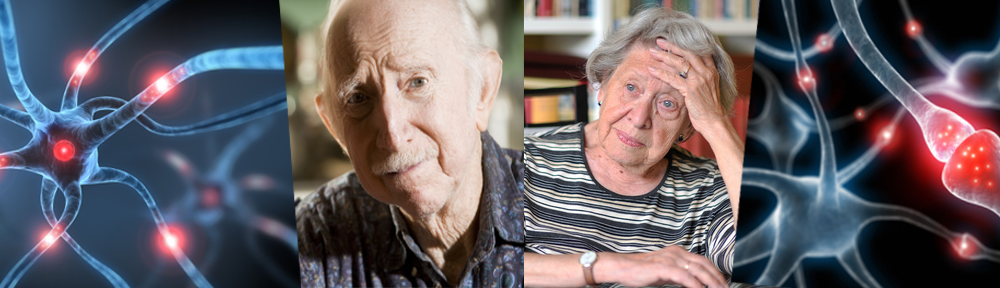
Tiny electrical shocks to the brain appear to enhance memory

News from the web:

Lightly shocking a person’s brain just before they learned a new task appeared to strengthen memory in a handful of patients with epilepsy, a tantalizing result that could have implications for Alzheimer’s disease, U.S. researchers said on Wednesday.

Pacemaker devices known as deep brain stimulators made by Medtronic and St. Jude Medical are already used to calm muscle tremors in patients with Parkinson’s disease and other movement disorders, and are being tested for a host of other conditions such as treatment-resistant depression.

The devices are implanted under the skin in the chest with wires leading up the neck connected to tiny electrodes implanted deep in the brain, which produce electrical impulses.

Read all about it HERE

What to do if you suspect Alzheimer’s

News from the web:

An early diagnosis can be helpful, medically and personally. The first thing to do is see a doctor, and try not to panic. Not all memory loss is a sign of the disease.

An appointment is missed. A bill goes unpaid. A television remote winds up in the freezer.

Are these harmless senior moments or worrisome warning signs that a parent may be in the early stages of Alzheimer’s disease?

Surveys consistently show that Alzheimer’s is the second most feared disease in America, aftercancer. Among those 55 and older, Alzheimer’s sometimes comes out on top.

Read all about it HERE

Keeping brain sharp may ward off Alzheimer’s protein

News from the web:

People who challenge their brains throughout their lifetimes — through reading, writing and playing games — are less likely to develop protein deposits in the brain linked with Alzheimer’s, U.S. researchers said on Monday.

Prior studies have suggested that people who are well educated and stay mentally active build up brain reserves that allow them to stay sharp even if deposits of the destructive protein called beta amyloid form in the brain.

But the latest study, based on brain-imaging research, suggests that people who stay mentally engaged beginning in childhood and remain so throughout their lives actually develop fewer amyloid plaques.

Read all about it HERE

Expert gives advice on Alzheimer’s prevention

News from the web:

Dr. Gary Small, a New York Times best-selling author and director of the UCLA Center on Aging, spoke atBaylor College of Medicine last week about his new book, The Alzheimer’s Prevention Program (Workman Publishing). He talked to Chronicle reporter Todd Ackerman about the expected explosion of the brain-robbing disease, the steps people can take to reduce their risks and the effect of the Internet.

Read all about it HERE

The Alzheimer’s Prevention Program

News from the web:

Just about everyone has some loss of memory as the decades collect. Don’t confuse normal aging with Alzheimer’s. But some people as they enter their 50s and 60s experience what is called “mild cognitive impairment” (MCI). They are often forgetful, can become a bit confused and display other symptoms suggestive of mild Alzheimer’s — but they can manage. However, MCI heralds a far greater likelihood of developing AD — as great as 15 times more risk. Some regard MCI as a transition to AD.

Alzheimer’s disease (AD) is the demon of older age. A small percentage of people (5 percent) will fall ill to its neurological destruction before the age of 65. But as we age into the 70s, 80s and beyond the numbers affected grow substantially. Today, every 70 seconds a person in the U.S. develops AD; estimates are that this rate will rise to every 30 seconds by 2050 as we all live longer. Not all dementia is due to Alzheimers: vascular dementia (due to blood vessel narrowing or stroke in the brain) accounts for perhaps 40 percent of severe memory problems (and other symptoms). But AD is the greatest threat to our memory — and even more so to our very sense of identity as we grow old.

Read all about it HERE

Alzheimer’s: Diet ‘can stop brain shrinking’

News from the web:

A diet rich in vitamins and fish may protect the brain from ageing while junk food has the opposite effect, research suggests.

Elderly people with high blood levels of vitamins and omega 3 fatty acids had less brain shrinkage and better mental performance, a Neurology study found.

Trans fats found in fast foods were linked to lower scores in tests and more shrinkage typical of Alzheimer’s.

A UK medical charity has called for more work into diet and dementia risk.

Read all about it HERE