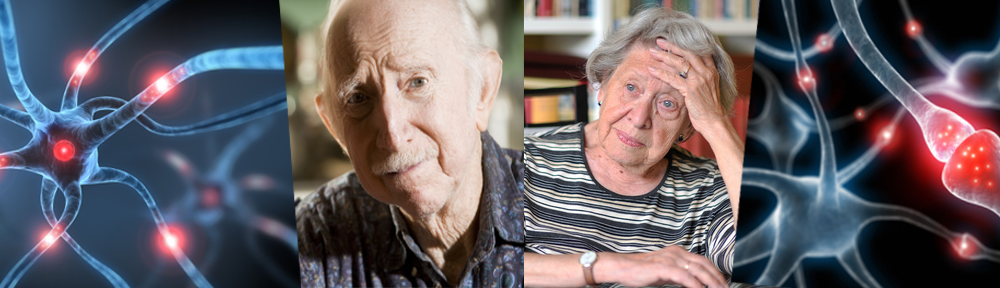
Scientists reverse Alzheimer’s in mice with breakthrough nanotechnology

A new nanotechnology treatment reversed Alzheimer’s symptoms in mice by restoring the brain’s natural cleanup system. The specially engineered nanoparticles helped clear toxic amyloid proteins from the brain and repair the blood-brain barrier, which normally protects and regulates the brain’s environment. In one striking experiment, elderly mice treated with the therapy later behaved like healthy younger mice.

Read more HERE

Alzheimer’s May Begin Decades Earlier Than You Think, New Mayo Clinic Study Finds

Alzheimer’s disease may begin its biological progression far earlier than symptoms suggest, with subtle shifts in brain and blood markers emerging decades in advance.

Scientists are uncovering a hidden phase of Alzheimer’s disease that may begin far earlier than most people realize. Long before memory loss becomes noticeable, subtle biological changes could already be underway — potentially starting in a person’s late 50s, according to new research from Mayo Clinic.

The study, published in Alzheimer’s & Dementia: The Journal of the Alzheimer’s Association, tracks when key changes in the brain and blood begin to speed up over a person’s lifetime. The findings offer clues about the most effective timing for detection and prevention efforts.

Read more HERE

Common Speech Pattern Could Be a Sign of Alzheimer’s, Scientists Say

New research from Baycrest, the University of Toronto, and York University  monitored nearly 250 older adults and collected their speech through picture description tasks. Over 700 speech features were extracted during the study, including pauses like “um” and “uh,” speech rate, vocabulary complexity,  coherence, and structure. The study found that people who have more pauses  have lower executive function (EF), which could lead to a risk of dementia. 

Read more HERE

The science of healthy aging

Aging is often thought of as a process of decline that begins at about 60- 65 and then relentlessly carries us toward our end, diminishing our capabilities as it goes. It is inevitable, immutable, and inexorable. 

Biomedical scientists now consider almost everything about that concept wrong. Aging is increasingly seen as a lifelong process that we can influence and alter to a remarkable degree. Researchers are learning more every day about the complex metabolic, cellular, and molecular processes within us, and they are using that knowledge to develop new ways not only to live longer, but to live better. 

Duke University School of Medicine is at the forefront of this new frontier of innovation and promise, which aims to add healthy years to life.  With pioneering research, compassionate care, and a long history in the field, Duke scientists and clinicians are reshaping how we understand, improve, and extend the human lifespan. 

Read more HERE