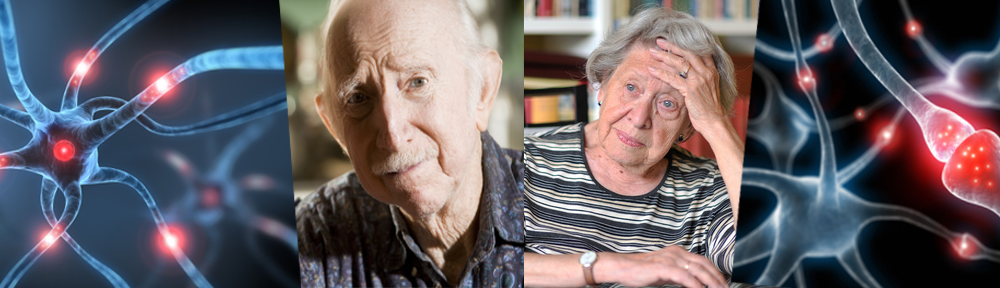
3 Million More Americans Should Get Diagnosis, Study Concludes

News from the web:

Three million Americans living with mild cognitive impairment should be diagnosed with Alzheimer’s disease, a tweak in terminology that could shed light on the condition’s cause and prepare patients for an inevitable decline, according to a new report.

The criteria for diagnosing Alzheimer’s disease were revised last year, placing more people in a category called mild cognitive impairment, or MCI, which is often a precursor to Alzheimer’s.

The new criteria detail three stages of Alzheimer’s disease: preclinical (before outward symptoms are visible); mild cognitive impairment (mild memory and thinking changes enough to be noticed but not debilitating); and dementia, or full-on Alzheimer’s disease.

Read all about it HERE

What to do if you suspect Alzheimer’s

News from the web:

An early diagnosis can be helpful, medically and personally. The first thing to do is see a doctor, and try not to panic. Not all memory loss is a sign of the disease.

An appointment is missed. A bill goes unpaid. A television remote winds up in the freezer.

Are these harmless senior moments or worrisome warning signs that a parent may be in the early stages of Alzheimer’s disease?

Surveys consistently show that Alzheimer’s is the second most feared disease in America, aftercancer. Among those 55 and older, Alzheimer’s sometimes comes out on top.

Read all about it HERE

How Alzheimer’s spread in brain

News from the web:

Two different research groups, which worked independent of each other, have made the same important discovery on how Alzheimer’s disease spreads in the brain.

According to a story in the New York Times in February 2, the groups’ findings have the potential to give us a much more sophisticated understanding of what goes wrong in Alzheimer’s disease and, more importantly, what can be done to prevent or repair damage in the brain.

The Times reported on the research teams of Bradley T. Hyman, MD, Ph.D., at Massachusetts General Hospital in Boston, and Karen E. Duff, Ph.D., of Columbia University Medical Center in New York.

Each research group found that the Alzheimer’s disease protein called tau can apparently spread from one part of the brain to other connected areas by effectively “jumping” from one nerve cell, neuron, to another.

Read all about it HERE

Alzheimer’s test shows who is at risk: take the quiz now

News from the web:

A simple test has been developed to determine whether your loved ones are at risk of Alzheimer’s. You can take the test below. Click + or – depending on whether you think the question represents your loved one. Some questions are worth more than one point.

The 21-question test distinguishes between normal forgetfulness and the more worrying memory lapses that could signal the early stages of dementia.

Doctors who have developed the test say it is almost 90 per cent accuate.

Read all about it HERE

Researchers replicate Alzheimer’s disease neurons with stem cells

News from the web:

Scientists have successfully replicated Alzheimer’s disease neurons with stem cells for the first time in a landmark, multi-year study – an achievement that may lead to critical new understanding of the disease, the scientists said.

Researchers out of UC San Diego School of Medicine created in vitro models of genetic and sporadic forms of Alzheimer’s disease, using induced pluripotent stem cells (iPSC) from patients who suffered from the neurodegenerative disorder.  The neurons were purified, meaning they were separated from other types of cells, to reduce variability in the experiment.

Read all about it HERE

Keeping brain sharp may ward off Alzheimer’s protein

News from the web:

People who challenge their brains throughout their lifetimes — through reading, writing and playing games — are less likely to develop protein deposits in the brain linked with Alzheimer’s, U.S. researchers said on Monday.

Prior studies have suggested that people who are well educated and stay mentally active build up brain reserves that allow them to stay sharp even if deposits of the destructive protein called beta amyloid form in the brain.

But the latest study, based on brain-imaging research, suggests that people who stay mentally engaged beginning in childhood and remain so throughout their lives actually develop fewer amyloid plaques.

Read all about it HERE