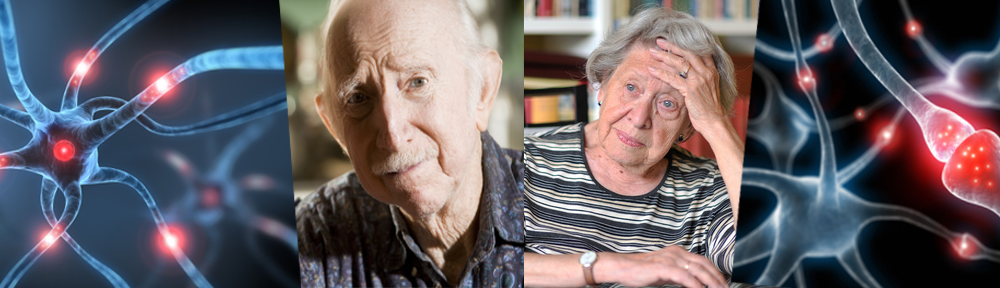
Alzheimer’s and brain deposits: Researchers study connections

News from the web:

With recent studies focusing more attention on memory loss, there is concern among Baby Boomers. However, some hopeful news has been emerging on the important topic of brain amyloid (protein deposits).ScienceDaily (Mar. 30, 2012) noted in reporting about amyloid beta in the brain of individuals with Alzheimer’s disease that although “there may not be a consensus as to whether the deposition contributes to the disease or is a consequence of the disease, there is agreement that it is not favored thermodynamically, meaning that something else is promoting the process.”Amyloid beta in the brain of individuals with Alzheimer’s disease

Read all about it HERE

visit us at AlzheimerHeadlines.com

Alzheimer’s caregivers often suffer in secret

News from the web:

Nearly every day, Kathy Eslinger takes her lunch break and drives to Whitehall Manor. Her mother recognizes her but doesn’t remember her name.

Eslinger combs her mother’s hair. She sings to her. And when the 85-year-old Alzheimer’s patient yells in fright, Eslinger cries.

“You never know one moment to the next how it’s going to be,” she said Friday, fresh from a good visit with her mother, Rose Doddy.

For family members, Alzheimer’s is as frustrating a disease as it is heart-breaking. Those emotions played out last week in the tragic story of Charles Snelling, a prominent Republican and lifelong patron of the Lehigh Valley. He was found dead Thursday, along with his ailing wife, Adrienne, in their Upper Macungie Township home.

If the Snelling family’s suspicions are true — that he ended her life and his own in anguish over her declining state — his death is a chilling portrait of the stresses saddling caregivers.

Read all about it HERE

visit us at AlzheimerHeadlines.com

Antibiotics for Alzheimer’s?

News from the web:

Researchers believe they have gained key insights on the development and progression of Alzheimer’s disease.

The findings could lead to the development of antibiotic treatments that could prevent the onset of the devastating illness.

Investigators have learned that a key protein, called a tau-protein, transforms from being a critical component of normal brain function to a sinister malformed villain that destroys brain cells.

Researchers at Beth Israel Deaconess Medical Center (BIDMC) developed the technology that distinguishes the two tau isoforms — one healthy and one disease-causing. Their research shows that only the disease-causing isoform is found in the neurons of Alzheimer’s patients and is exhibited at a very early stage of disease.

Read all about it HERE

visit us at AlzheimerHeadlines.com

Vascular Dementia and Alzheimer’s Disease: Need to Study these Brain Illnesses

News from the web:

Following Alzheimer’s disease, Vascular dementia is another common cause of dementia. It is hard to believe for any individual that he is suffering from such a disease which makes him forget even his own home and family. In UK, around 200,000 people are affected by this disease. But experts still have to find out the reason behind the occurrence of this illness. The origins of vascular dementia are still unknown to them.

Read all about it HERE

visit us at AlzheimerHeadlines.com

Alzheimer’s at 39

News from the web:

Michael Ellenbogen was 39 when he first started forgetting little things—acronyms related to his business, work meetings and phone numbers.

“I was always very good in the sense that I could remember everything,” Ellenbogen said.  “I didn’t have to write anything down.  I would just remember it.  And then I started forgetting the names of my employees.  I even started to stutter trying to say my own name.”

In the beginning, Ellenbogen’s wife Shari said she wasn’t overly concerned.  “When he kept saying he was forgetting things, I would say, ‘Oh, I forget things, too,’” said Shari Ellenbogen, a nurse at Doylestown Hospital in Pennsylvania.  She believed it was simply a natural consequence of growing older.

Read all about it HERE

visit us at AlzheimerHeadlines.com

Treating Alzheimer’s Disease: A Role for the FKBP52 Protein

News from the web:

New research in humans reveals that the so-called FKBP52 protein may prevent the Tau protein from turning pathogenic. This may prove significant for the development of new Alzheimer’s drugs and for detecting the disease before the onset of clinical symptoms.

A study published online March 21 in the Journal of Alzheimer’s Disease, for the first time demonstrates that the FKBP52 protein, discovered by Prof. Etienne BAULIEU twenty years ago, may prevent hyperphosphorylation of Tau protein, which has been shown to characterise a number of cerebral neurodegenerative diseases, including Alzheimer’s Disease (AD).

This work has been carried out by Professor Etienne Baulieu and his research team at Inserm (National Institute for medical research in France) with the support of philanthropists who help the Institut Baulieu, based in France.

Read all about it HERE

visit us at AlzheimerHeadlines.com