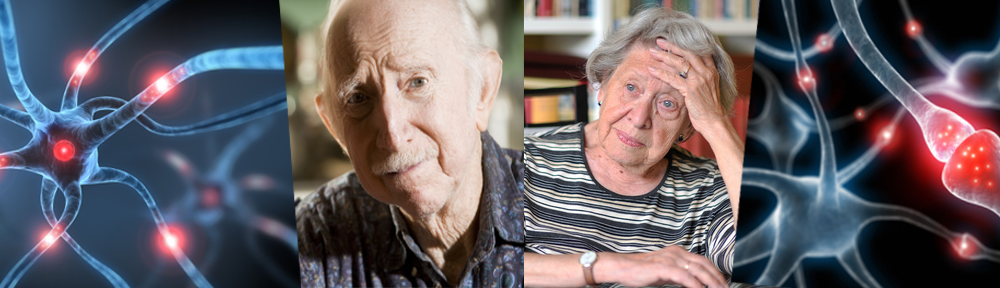
The new pathway from the scavenger protein that cleans neurons

Like in a big city. In our organism, if the collection of waste is blocked, it accumulates. If the lack of cleanliness affects the nerve cells, of course, this can have repercussions. So what? Then it makes sense to rely on those who naturally help certain neurons to eliminate the tau protein, which is linked to Alzheimer’s disease and other neurodegenerative disorders.

The ‘scavenger’ protein is produced as a result of instructions in the DNA gene that, in turn, stimulates the production of a kind of invisible protein ‘tag’ (CRL5SOCS4) for tau.

Read more HERE

How to reverse early dementia symptoms — by a neuroscientist

After being told they were in the early stages of Alzheimer’s disease, some of Dr Majid Fotuhi’s patients were preparing to put their affairs in order. Then his advice changed everything for them. 

One of the leading neuroscientists in America, Fotuhi, 63, fled post-revolutionary Iran for Canada in 1982, before moving to the US and completing his PhD in neuroscience at Johns Hopkins University. He attended Harvard Medical School, returning to Johns Hopkins for his neurology residency. There, in the early 2000s, that he began to question the prevailing orthodoxy. 

He realised that many people were being diagnosed with Alzheimer’s who didn’t yet need to be. “They had treatable conditions that were contributing to cognitive decline, yet their problems were being put down to plaques and tangles,” he says.

Read more HERE

Researchers say AI can predict Alzheimer’s disease with close to 93 percent accuracy

Researchers say they are now able to predict Alzheimer’s disease with close to 93 percent accuracy using artificial intelligence.

More than 800 brain scans helped the AI to identify anatomical changes in the brain that signaled the start of the most common form of dementia, the Worcester Polytechnic Institute in Massachusetts said on Thursday.

The findings follow years of previous research showing that AI could help spot early risk factors for Alzheimer’s, predict risk and identify patients with undiagnosed Alzheimer’s disease.

Read more HERE

Enhanced brain cells clear away dementia-related proteins

WashU Medicine researchers designed a cellular immunotherapy that turns astrocytes (green), a type of cell in the brain, into super cleaners that sweep away Alzheimer’s-related proteins. With this new feature, the cells successfully reduced the amount of harmful amyloid beta plaques (blue) in the brains of mice.

The new generation of Alzheimer’s disease drugs — the first proven to change the course of the disease — typically extend independent living for patients by 10 months. Called monoclonal antibodies, they reduce the accumulations of a harmful protein, amyloid, in the brain and require high-dose, once- or twice-monthly infusions of the medication.

See the article HERE

Can we prevent Alzheimer’s disease within a decade?

Alzheimer’s disease is one of the most enigmatic brain afflictions and among the greatest health care challenges facing the nation. It affects more than 7 million Americans — a number projected to double by 2060. This article is the first in the series “USC United Against Alzheimer’s: Collaborating in Research and Care,” which illustrates how USC researchers and clinicians are making groundbreaking strides in the treatment, prevention and care of Alzheimer’s.

Read more HERE

The former Chancellor of the University of Denver was diagnosed with Alzheimer’s. Then, she wasn’t

Rebecca Chopp was determined to make the best of her diagnosis. It was 2019, and neurologists had just confirmed that the University of Denver chancellor had Mild Cognitive Impairment or MCI due to Alzheimer’s disease. Chopp, who didn’t want to risk letting her condition affect work, stepped down from her job.

“It’s a big job, and what if I made a mistake?” Chopp recalls thinking. “Plus, whatever time I had left, I wanted to be with my husband and friends and do things I hadn’t done.”

Questions about Chopp’s cognitive health first surfaced when she got lost driving to a regular checkup with her doctor. At the appointment, she told the doctor about it. Chopp also mentioned that she was sleeping more than usual, after years of not needing much sleep. The doctor recommended Chopp undergo some cognitive testing. 

“I was so arrogant. I laughed at her and said, ‘Sure, because I’d never failed a test in my life,'” she recalls. “So I took it, and I didn’t pass.”

Read more HERE