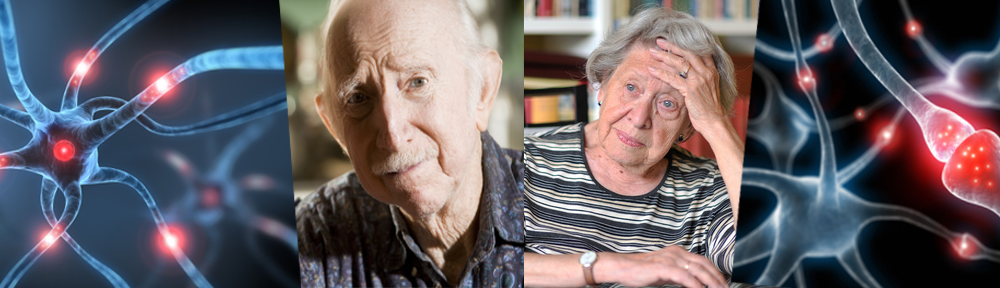
Scientists have found a new vaccine to be effective against Alzheimer’s disease

News from the web:

Here is some good news about the fight against Alzheimer. Scientist have declared a human trail successful. The new treatment involves active immunisation, using a type of vaccine designed to trigger the body’s immune defence against beta-amyloid.

In this second clinical trial on humans, the vaccine was modified to affect only the harmful beta-amyloid.

The researchers found that 80 per cent of the patients involved in the trials developed their own protective antibodies against beta-amyloid without suffering any side effects over the three years of the study.

Read all about it HERE

visit us at AlzheimerHeadlines.com

Immune system helps with Alzheimer

News from the web:

Researchers have found that a gene called CCR2 can help with fighting memory loss for people with Alzheimer’s disease. This is a very exciting result. It may be that CCR2-associated immunity could be strengthened in humans to slow Alzheimer’s disease. The work is still in it’s early stages but the results should be encouraging.

Read all about it HERE

visit us at AlzheimerHeadlines.com

Maria Carrillo about Alzheimer

News from the web:

Maria Carrillo, a sr director at the Alzheimer association, provides a special at CNN about Alzheimer. She tells about the 5.4 Million American who live with Alzheimer’s disease and makes it personal by talking about her own mother in law who suffers from the disease.

She then goes on to talk about the National Plan to get Alzheimer’s disease under controle by 2025. The plan covers the spectrum of Alzheimer’s issues, including treatment and prevention, clinical care, support for families in their homes and communities as well as public education and engagement.

Read all about it HERE

visit us at AlzheimerHeadlines.com

Clock ticking with new plan to fight Alzheimer’s

News from the web:

The clock is ticking: The first National Alzheimer’s Plan sets a deadline of 2025 to finally find effective ways to treat, or at least stall, the mind-destroying disease.

The Obama administration finalizes the landmark national strategy on Tuesday, laying out numerous steps the government and private partners can take over the coming years to fight what is poised to become a defining disease of the rapidly aging population.

But some of the work is beginning right away.

Starting Tuesday, embattled families and caregivers can check a new one-stop website — www.alzheimers.gov — for easy-to-understand information about dementia and where to get help in their own communities.

The National Institutes of Health is funding some major new studies of possible therapies, including a form of insulin that’s squirted into the nose.

Read all about it HERE

visit us at AlzheimerHeadlines.com

Alzheimer’s Patients Turn To Stories Instead Of Memories

News from the web:

Ask family members of someone with Alzheimer’s or another dementia: Trying to talk with a loved one who doesn’t even remember exactly who they are can be very frustrating.

But here at a senior center in Seattle, things are different.

On one recent day, 15 elderly people were forming a circle. The room is typical — linoleum floors, cellophane flowers on the windows, canes and wheelchairs, and walkers lined up against the wall.

Linda White is leading a session based on a program called TimeSlips. The idea is to show photos to people with memory loss, and get them to imagine what’s going on — not to try to remember anything, but to make up a story.

Storytelling is one of the most ancient forms of communication — it’s how we learn about the world. It turns out that for people with dementia, storytelling can be therapeutic. It gives people who don’t communicate well a chance to communicate. And you don’t need any training to run a session.

Read all about it HERE

visit us at AlzheimerHeadlines.com

Device to slow down Alzheimer’s disease

News from the web:

New research suggests a ‘brain pacemaker’ may slow the progression of Alzheimer’s disease.  In a small study, John Hopkins University scientists found a device that sends electrical impulses to the brain’s memory regions appeared to increase neuron activity in patients who were suspected to have the disease.

The researchers implanted the device in six people with mild or early-stage Alzheimer’s disease.  The device includes electrodes, which are implanted in the brain, and a pacemaker, which is implanted in the chest, connected to the electrodes by wires.  The pacemaker orders the electrodes to continuously stimulate the brain.  This technique is known as deep brain stimulation, or DBS.

A year after implanting the device, the researchers conducted PET scans on the patients and found they actually showed an increase of glucose metabolism, which the brain uses as fuel to function.  Greater amounts of glucose metabolism also indicate greater amounts of brain cell activity, according to the researchers.

Read all about it HERE

visit us at AlzheimerHeadlines.com