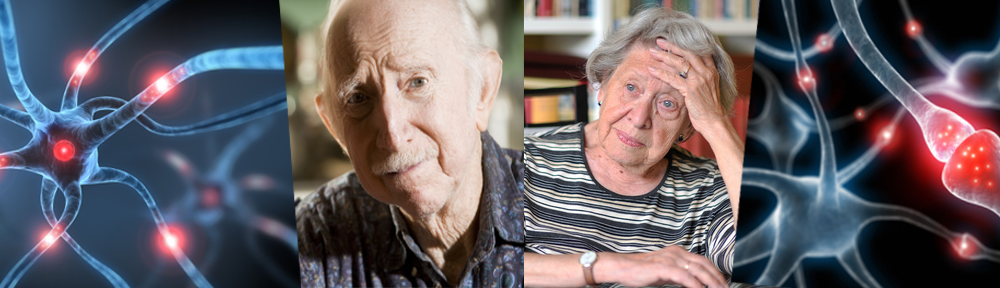
Hope For Early Alzheimer’s Test In Spinal Fluid

News from the web:

New research led by Nottingham University in the UK suggests abnormal levels of seven proteins in spinal fluid could be markers for the early stages of Alzheimer’s disease, raising hopes of a test for a disease that is difficult to diagnose at the beginning. The researchers write about their findings in the Journal of Alzheimer’s Disease.

Study co-author Dr Kevin Morgan, professor of Human Genomics and Molecular Genetics at Nottingham, told the press on Tuesday that the findings are “a new lead for improving early diagnosis of Alzheimer’s disease”.

An early diagnosis of Alzheimer’s disease would help people prepare for the future and also enable them to be involved in clinical trials at a much earlier stage of the disease, when treatments are more likely to show positive results, he added.

Read all about it HERE

What to do if you suspect Alzheimer’s

News from the web:

An early diagnosis can be helpful, medically and personally. The first thing to do is see a doctor, and try not to panic. Not all memory loss is a sign of the disease.

An appointment is missed. A bill goes unpaid. A television remote winds up in the freezer.

Are these harmless senior moments or worrisome warning signs that a parent may be in the early stages of Alzheimer’s disease?

Surveys consistently show that Alzheimer’s is the second most feared disease in America, aftercancer. Among those 55 and older, Alzheimer’s sometimes comes out on top.

Read all about it HERE

Alzheimer’s test shows who is at risk: take the quiz now

News from the web:

A simple test has been developed to determine whether your loved ones are at risk of Alzheimer’s. You can take the test below. Click + or – depending on whether you think the question represents your loved one. Some questions are worth more than one point.

The 21-question test distinguishes between normal forgetfulness and the more worrying memory lapses that could signal the early stages of dementia.

Doctors who have developed the test say it is almost 90 per cent accuate.

Read all about it HERE

Alzheimer’s risk can be detected 10 years before symptoms, study finds

News from the web:

Alzheimer’s disease is a debilitating neuro-degenerative disease associated with memory loss, dementia and the eventual loss of motor functions. Often it is hard for doctors to officially diagnose someone with the disease until it has extensively progressed. According to Alzheimer’s Disease International, nearly 10 million people suffer from dementia in Europe alone, with Alzheimer’s accounting for the overwhelming majority of these cases. For years, scientists around the world have tried to come up with better treatments and a cure for the disease, but few have been shown to be particularly effective.

In a new scientific paper published in the January 1, 2012 edition of the Archives of General Psychiatry, a team of Swedish researchers have now shown that it’s possible to detect individuals with a high risk of developing Alzheimer’s 10 years before they show any outward symptoms. If their technique proves successful, it could become an important tool for managing future Alzheimer’s patients.

Read all about it HERE

Early Alzheimer’s detection – cost effective and easy

News from the web:

Boston researchers have reported a new method for detecting subtle brain changes in people who have no memory problems but who may already be in the earliest stages of Alzheimer’s disease.

The findings, published online today in the medical journal Neurology, may help speed clinical trials for potential Alzheimer’s treatments, according to Dr. Bradford Dickerson, an associate professor of neurology at Harvard Medical School and lead author of the study. “We need efficient, cost-effective ways to screen people for research,” said Dickerson, who also is a brain specialist at Massachusetts General Hospital. “This will potentially give us a tool that will help identify people in a more efficient manner.”

Dickerson explained that his method is not ready for use in physicians’ offices. Researchers and the medical community still must pinpoint reliable markers for the disease that could be used much the same way doctors now measure early signs of heart disease by monitoring patients’ cholesterol levels.

Read all about it HERE