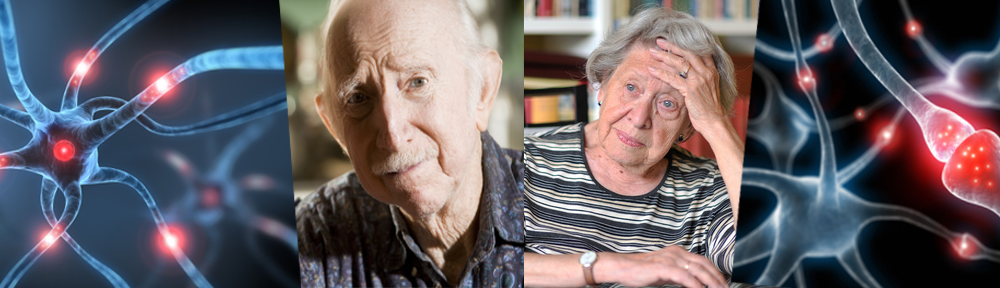
Is it Alzheimer’s or depression?

News from the web:

Because symptoms of Alzheimer’s and depression are very similar, a wrong diagnosis can be costly.

“Chronic depression can cause a structure in your brain to shrink, and that structure is called the hippocampus and that structure is responsible for new learning and remembering,” said psychologist Dr. Shannon Gould.

While depression can be treated and often cured, Alzheimer’s can only be managed. An early diagnosis means early treatment. Neuropsychological evaluations can help determine if it’s dementia or depression.

“We are looking at attention, concentration, processing speed. I may have my patients read a short story and recall as much of that story as they can,” said Dr. Gould.

Depression is not always common in Alzheimer’s patients, but a deficit in their daily living is.

“Difficulty taking medication, maybe they are missing a dosage of medication here, or let’s say a person has always managed the finances, was impeccable with balancing the check book, now suddenly they have difficulty writing out a check properly,” said Dr. Gould.

Read all about it HERE

visit us at AlzheimerHeadlines.com

‘Game plan’ key for Alzheimer’s patients to manage illness

News from the web:

Pat Summitt talked about her “game plan,” one of those fundamental phrases from Coaching 101 class.

Summitt was diagnosed with Alzheimer’s disease last summer and revealed it during interviews in August.

This week, Summitt will lead the Tennessee Lady Vols into the NCAA Tournament, something she has done every year since 1982. She has won eight national titles. The Lady Vols won the SEC tournament for the third- straight time.

As one of the country’s most visible Alzheimer’s victims, the awareness Summitt has brought has been invaluable.

Read all about it HERE

visit us at AlzheimerHeadlines.com

Alzheimer’s path found by Columbia researchers

News from the web:

Columbia University researchers have made a surprising discovery about how Alzheimer’s disease appears to spread in the brain, a finding that could one day lead to early treatment for the memory-robbing disease.

The researcher’s findings – published last week in the journal PLoS One – answered a question that had stumped scientists for 25 years: does Alzheimer’s pop up independently in different parts of the brain or does it spread in a predictable pattern from one specific place in the brain to another.

Read all about it HERE

Hope For Early Alzheimer’s Test In Spinal Fluid

News from the web:

New research led by Nottingham University in the UK suggests abnormal levels of seven proteins in spinal fluid could be markers for the early stages of Alzheimer’s disease, raising hopes of a test for a disease that is difficult to diagnose at the beginning. The researchers write about their findings in the Journal of Alzheimer’s Disease.

Study co-author Dr Kevin Morgan, professor of Human Genomics and Molecular Genetics at Nottingham, told the press on Tuesday that the findings are “a new lead for improving early diagnosis of Alzheimer’s disease”.

An early diagnosis of Alzheimer’s disease would help people prepare for the future and also enable them to be involved in clinical trials at a much earlier stage of the disease, when treatments are more likely to show positive results, he added.

Read all about it HERE

What to do if you suspect Alzheimer’s

News from the web:

An early diagnosis can be helpful, medically and personally. The first thing to do is see a doctor, and try not to panic. Not all memory loss is a sign of the disease.

An appointment is missed. A bill goes unpaid. A television remote winds up in the freezer.

Are these harmless senior moments or worrisome warning signs that a parent may be in the early stages of Alzheimer’s disease?

Surveys consistently show that Alzheimer’s is the second most feared disease in America, aftercancer. Among those 55 and older, Alzheimer’s sometimes comes out on top.

Read all about it HERE

Alzheimer’s test shows who is at risk: take the quiz now

News from the web:

A simple test has been developed to determine whether your loved ones are at risk of Alzheimer’s. You can take the test below. Click + or – depending on whether you think the question represents your loved one. Some questions are worth more than one point.

The 21-question test distinguishes between normal forgetfulness and the more worrying memory lapses that could signal the early stages of dementia.

Doctors who have developed the test say it is almost 90 per cent accuate.

Read all about it HERE